
 EN
EN
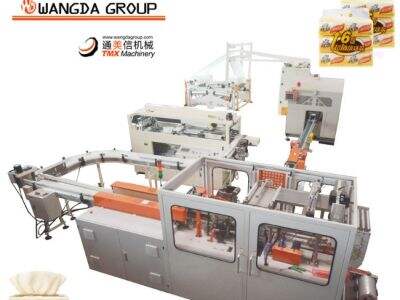
This is why in the tissue production world automation comes into play as a primary player offering essential assistance in reducing per-unit production costs to companies like Wangda Industrial. This tissue making machine allows companies to produce more tissue products from the same amount of raw material at lower costs.
The effect automation has for reducing labour costs in tissue-making.
One of the cost-saving aspects of automation in tissue production is that it reduces reliance on workers. In the past, when most things were done manually by humans and only later taken up largely by machines, companies had to hire many people to get all (or at least some) of the work done. This could get costly because companies had to pay each worker a wage. Automation is the process where tissue paper making machine perform many of the same tasks quicker and with more efficiency than human beings. As we do not need as many people to do what a few hundred years ago made our latest grateful generation queasy like willing soldiers.
Automated machinery in tissue production to increase efficiency and reduce waste.
Automation also reduces production prices by allowing the production process to be more streamlined. The higher the work is done by human hands, there was always an error or a mistake. In turn, workers will work to fix these mistakes at the expense of resources and time. The tissue roll machine, on the other hand, are able to accomplish this with accuracy which can help in avoiding mistakes and waste. With the help of automated machinery, firms such as Wangda Industrial can now produce the same number of tissue products with less time and lesser errors thereby saving more money.
Robotics and impacting per-unit production cost for tissue lines
A significant contributor to reducing the per-unit production costs in tissue lines is robotics. Robots are sophisticated machines that can do a variety of things much faster and more precise than any human. Robots can be programmed to perform tissue production such as cutting, packaging and quality control. Using robots of businesses can automate production processes and ensure higher levels of efficiency and consistency in those, ultimately bringing down their per-unit costs. Through robotics, we can also lower the probability of labour injury to workers as they are doing replacing something that may be hazardous for human hands with machinery.
Case studies illustrating the cost savings gained by using automation in tissue production
Some case studies have detailed the cost savings realized through automation in tissue manufacturing. For instance, a business that went from hand chopping and packaging to utilizing automatic machinery was capable of doing 150% far more product or service in addition to a price savings labor power really worth about 30%. In a separate instance, another company invested in robotic quality control and experienced a 20% reduction in defects and a 15% increase in overall production efficiency. This is how automation can help us lower the per-unit production cost and in these examples prove to be key for the success of tissue lines.
Finally, Automation helps tissue manufacturers like Wangda Industrial reduce per-unit production cost. Companies can produce higher amounts of tissue products by lowering labor costs, improving efficiency, standardizing processes, automating with robotics and achieving cost savings through automation. The automation of tissue production offers enormous potential for cost reduction and increased efficiency with the continued technological advancements.
Table of Contents
- The effect automation has for reducing labour costs in tissue-making.
- Automated machinery in tissue production to increase efficiency and reduce waste.
- Robotics and impacting per-unit production cost for tissue lines
- Case studies illustrating the cost savings gained by using automation in tissue production